AI vision
Recognises five pedestrian groups on the crossing: children, pregnant women, the elderly, wheelchair users, and general pedestrians.
- Camera
- NVIDIA Jetson edge computer
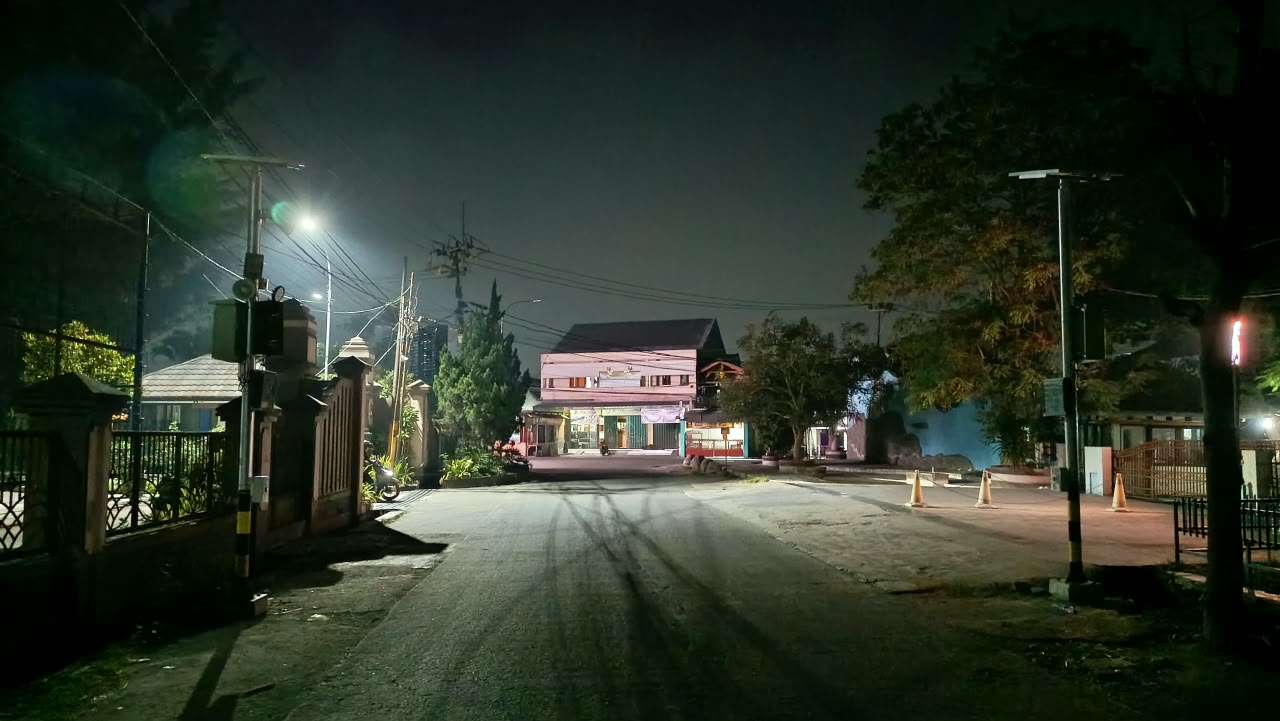
An innovation from Universitas Pendidikan Indonesia
JAPATI (Jalur Penyeberangan Berbasis Artificial Intelligence) adapts crossing time to who is crossing, and warns vehicles that approach too fast.
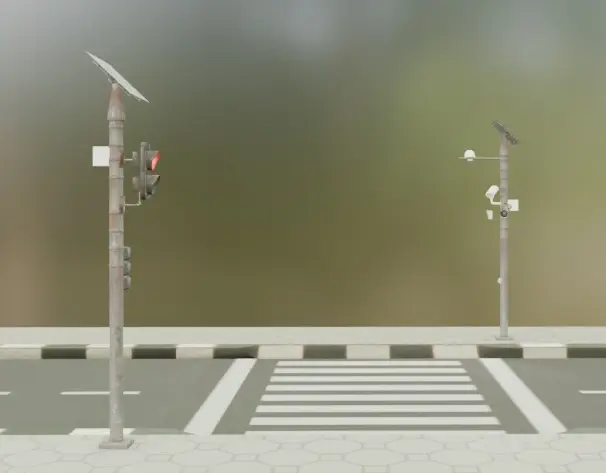
JAPATI is a crossing signal that can see. A camera and AI recognise children, pregnant women, the elderly, and wheelchair users, then give them enough time to cross. A radar watches oncoming traffic and sounds a warning when a vehicle is going too fast.
Developed by lecturers and students of Universitas Pendidikan Indonesia, JAPATI has completed field testing at Technology Readiness Level (TRL) 7 on the UPI Cibiru campus.
Background
Most pedestrian signals use a fixed duration. Slower pedestrians are forced to hurry, and vehicles speeding towards the crossing get no warning at all.
The walk phase is the same for everyone, regardless of road width or who is crossing.
Children, pregnant women, the elderly, and wheelchair users need more time and often cross anxiously.
Drivers who do not slow down at a red light are noticed only when it is too late.
Four steps, from the button press to the other side of the road.
A pedestrian presses the touch button on the pole to request a crossing.
The camera watches the zebra crossing and the AI recognises the pedestrian group in real time.
Duration is calculated from road width and the walking speed of that group. The LED countdown can only increase, never get cut short.
While the light is red, the radar monitors vehicles. If one exceeds the safe speed, a warning siren sounds.
One pole, four subsystems working together.
Tap a number on the pole to see what it does.
Drag to rotate, pinch or scroll to zoom.
The solar panel in the illustration and 3D model is a planned upgrade.
Recognises five pedestrian groups on the crossing: children, pregnant women, the elderly, wheelchair users, and general pedestrians.
The radar tracks the speed of approaching vehicles. The laser measures road width during installation as the basis for timing.
The light stops traffic, the LED matrix shows the countdown, and the speaker gives voice guidance and the warning siren.
Pedestrians request a crossing. The camera and AI run only on request, which saves power.
Figures from the TRL 7 Field Test Report. Each figure is labelled by how it was tested.
Field test on 28 August 2026, UPI Cibiru campus.
From the lab to the open road.
Technology architecture, sensor integration, and adaptive AI model development.
Vulnerable road user recognition and the early warning system tested on real roads.
UPI Cibiru campus, Bandung.
View locationRoad-worthiness certification, production, and partnership with government.
Next development
Energy independenceA planned ±300 Wp solar panel with battery storage, so the pole can run without grid power.